01

Columbia Icefield Tour & Glacier Skywalk

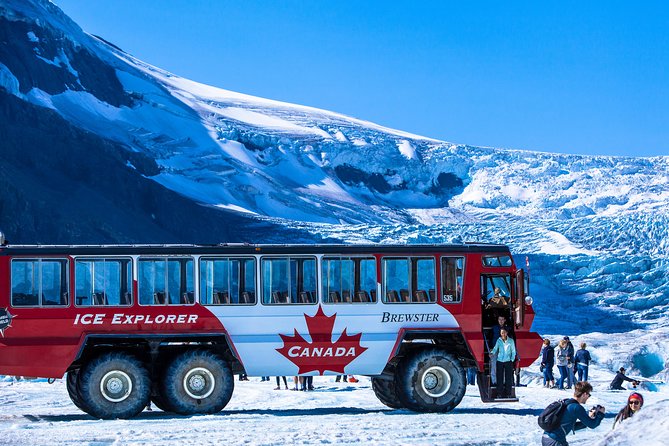
Columbia Icefield Tour including the Glacier Skywalk from Icefield Glacier Discovery Centre. Discover the awe-inspiring mountain scenery and massive glaciers of Alberta's Rocky Mountain region on this Columbia Icefields tour.

Columbia Icefield Tour & Glacier Skywalk
Book Glacier Skywalk and Athabasca Glacier Tour
Jasper Wildlife Tour Videos

02

Columbia Icefield Glacier Skywalk

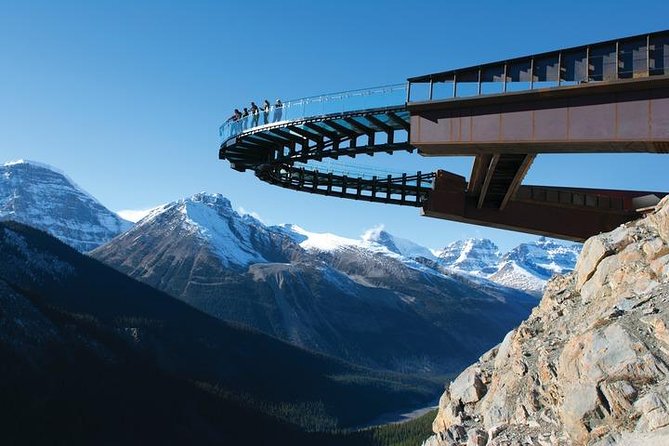
Take in the incredible landscape of Jasper National Park from high up with this visit to the Glacier Skywalk and transfer from Columbia Icefield. Feel the adrenaline rush of stepping out onto the glass-bottomed, 1,312-foot long (400-meter) walkway.

Columbia Icefield Glacier Skywalk
Book the Glacier Skywalk
Jasper Wildlife Tour Videos

03

Book Jasper

Book Jasper National Park Adventures and Attractions. Jasper National Park, located in the province of Alberta, Canada, is one of the largest and most northerly of the Rocky Mountain national parks, offering a sublime expanse of untamed wilderness for visitors to explore.

Book Jasper National Park Book Jasper
Jasper Wildlife Tour Videos

Columbia Icefield Fat Truck Ice Odyssey

The Columbia Icefield Fat Truck Ice Odyssey combines wilderness adventure, glacier exploration, and immersive mountain scenery into a unique alpine excursion. It offers visitors a chance to experience the Columbia Icefield environment from inside a specialized expedition vehicle designed specifically for some of the harshest and most fascinating terrain in the Canadian Rockies.

Start of the Columbia Icefield Fat Truck Ice OdysseyCanadian Rockies Adventure Provided by Pursuit.
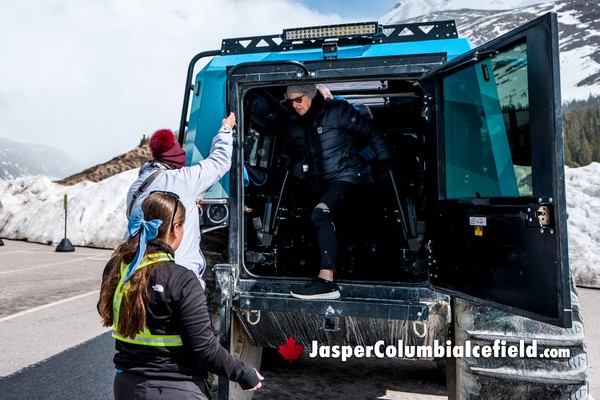
Boarding the Columbia Icefield Fat Truck Ice Odyssey

Starting the Columbia Icefield Fat Truck Ice Odyssey

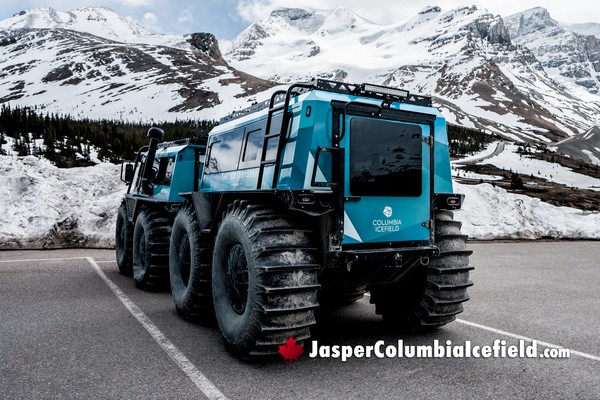
The Columbia Icefield Fat Truck Ice Odyssey is a rugged alpine exploration experience designed to take visitors deep into terrain that feels remote, raw, and almost otherworldly. Unlike traditional sightseeing vehicles, the Fat Truck is purpose-built for extreme environments, with oversized low-pressure tires and a compact expedition-style design that allows it to travel across snow, ice, rocky ground, glacial runoff areas, and uneven mountain terrain that ordinary vehicles could never safely cross. The experience feels part glacier expedition, part high-altitude wilderness tour. As the journey begins, visitors board the enclosed all-terrain vehicle near the Columbia Icefield area along the Icefields Parkway. The surrounding landscape immediately sets the tone - massive glaciers spill down mountain valleys, cold winds sweep across the alpine basin, and peaks rise sharply in every direction. The Fat Truck itself looks engineered for polar exploration, giving the excursion a distinctly adventurous atmosphere before it even starts moving.

Once underway, the vehicle slowly climbs and crawls through terrain shaped by ice and extreme weather. The ride is deliberate rather than fast, allowing guests to fully absorb the immense scale of the environment. The oversized tires grip loose rock, shallow snowfields, muddy meltwater paths, and glacial moraine with remarkable stability. Passengers often notice how isolated and untouched the landscape feels compared to standard roadside viewpoints. The farther the vehicle travels into the alpine terrain, the more the modern world seems to disappear behind the glaciers and mountains.

The scenery during the Ice Odyssey constantly changes. In some areas, visitors may pass ancient ice formations, exposed rock polished smooth by glaciers, or braided streams carrying icy meltwater across the valley floor. Elsewhere, the terrain appears almost lunar - gray stone, scattered snow patches, and windswept ridges stretching beneath towering icefields. Depending on weather and season, sunlight may reflect brilliantly off snow and ice, while clouds and mist can create a dramatic high-mountain atmosphere that feels both beautiful and intimidating.

The Fat Truck's elevated seating and panoramic windows help guests appreciate the scale of the Columbia Icefield region. Guides often interpret the landscape during the excursion, explaining how glaciers move, how meltwater shapes valleys, and how the harsh alpine environment supports surprisingly resilient forms of life. The experience is not only scenic, but educational, giving visitors a stronger understanding of glacial geography, climate conditions, and the immense geological forces that created the Canadian Rockies.

One of the most memorable aspects of the Ice Odyssey is the sense of access. The Fat Truck reaches terrain that many visitors would never experience on foot, especially in shoulder seasons or areas where the ground is too rugged, wet, or unstable for regular touring vehicles. This creates the feeling of participating in a genuine alpine expedition rather than simply viewing mountains from a roadside platform.

Weather plays a major role in the atmosphere of the experience. Bright summer days reveal vivid glacier blues, rugged cliffs, and expansive mountain panoramas, while colder overcast conditions create a dramatic arctic-like environment where the icefields seem endless. Even during warmer months, temperatures can feel surprisingly cool because of elevation, glacial winds, and rapidly changing mountain weather.

The Columbia Icefield Fat Truck Ice Odyssey combines wilderness adventure, glacier exploration, and immersive mountain scenery into a unique alpine excursion. It offers visitors a chance to experience the Columbia Icefield environment from inside a specialized expedition vehicle designed specifically for some of the harshest and most fascinating terrain in the Canadian Rockies.

Boarding the Columbia Icefield Fat Truck Ice Odyssey

Boarding the Columbia Icefield Fat Truck Ice Odyssey feels more like preparing for a remote alpine expedition than joining a standard sightseeing tour. Guests typically arrive in a dramatic high-mountain setting surrounded by glaciers, rocky peaks, cold alpine winds, and the immense open terrain of the Columbia Icefield region. The atmosphere immediately feels adventurous, with the specialized Fat Truck vehicles parked nearby looking ready for extreme backcountry conditions.

Before boarding, visitors often gather at the staging area where guides provide a safety and orientation briefing. The guides explain the route, terrain conditions, vehicle features, and the changing mountain weather that can affect the experience. Even during summer, the air can feel cool and crisp because of the nearby glaciers and elevation. Guests frequently layer jackets, hats, and outdoor clothing before departure as the environment can shift quickly from sunshine to cold winds or light mountain precipitation.

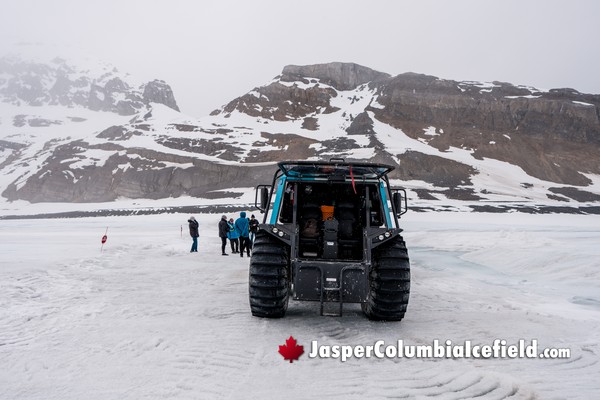
The Fat Truck itself immediately attracts attention because of its unusual design. Its oversized balloon-like tires, elevated body, rugged suspension, and compact expedition styling give it the appearance of an Arctic exploration machine. The vehicle sits higher than most visitors expect, so boarding involves climbing sturdy metal steps or ladder-style entry points into the enclosed passenger cabin. This adds to the feeling that the excursion is entering terrain inaccessible to ordinary vehicles.

Inside, the cabin is built for durability and visibility. Large windows surround the seating area, allowing passengers to see glaciers, mountain ridges, meltwater channels, and rocky alpine terrain from nearly every angle. The seating arrangement feels practical and expedition-oriented rather than luxurious, emphasizing the rugged nature of the environment outside. Guests often notice the combination of industrial engineering and alpine utility as soon as they step inside.

As passengers settle into their seats, anticipation builds while the Fat Truck engine starts and the vehicle slowly begins moving away from the staging area. The massive tires absorb uneven ground almost immediately, giving the ride a distinctive floating sensation compared to buses or highway vehicles. From the first moments after departure, visitors feel that they are leaving conventional tourist infrastructure behind and entering a harsher glacial landscape shaped by snow, ice, rockfall, and centuries of mountain weather.

The boarding process itself becomes part of the adventure because it transitions guests from a roadside mountain destination into an immersive alpine exploration experience. The sounds of the engine, the height of the vehicle, the cold air outside, and the sight of glaciers surrounding the route all contribute to the feeling that the Ice Odyssey is not simply transportation - it is the beginning of a true high-mountain expedition across one of the Canadian Rockies' most rugged environments. Book the Fat Truck Ice Odyssey

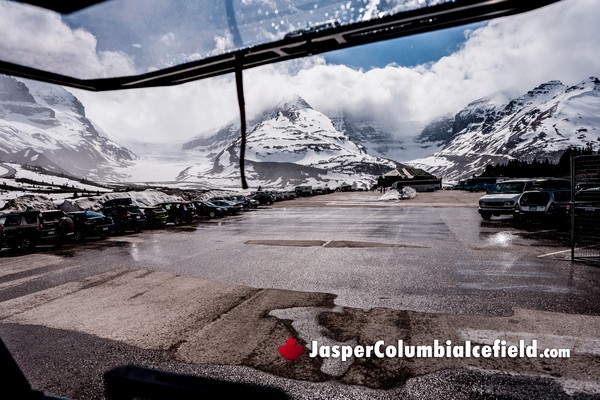
Beginning the Fat Truck Columbia Icefield Ice Odyssey Ride

The start of the Ice Odyssey often shifts from simple sightseeing into something that feels more exploratory and immersive. The farther the Fat Truck advances into the Columbia Icefield terrain, the more the scenery resembles an Arctic expedition landscape - raw, cold, immense, and shaped almost entirely by natural forces.

Beginning the Fat Truck Ride at the Columbia Icefield Ice Odyssey
Views from Inside the Columbia Icefield Fat Truck Ice Odyssey

Beginning the Fat Truck Columbia Icefield Ice Odyssey Ride

Beginning the Fat Truck Columbia Icefield Ice Odyssey ride feels like crossing the boundary between the paved mountain world and the untamed glacial wilderness beyond it. As the vehicle slowly pulls away from the staging area, the atmosphere immediately changes. The sounds of nearby visitors and roadside activity fade behind the oversized tires and low mechanical rumble of the Fat Truck moving into the rugged alpine terrain.

The first moments of the ride introduce passengers to the vehicle's unique movement. Unlike a highway coach or tour bus, the Fat Truck rolls with a slow, deliberate motion designed for rough conditions. The enormous low-pressure tires cushion rocks, dips, shallow streams, loose gravel, and uneven glacial moraine, creating a floating sensation as the expedition vehicle begins navigating terrain shaped by centuries of ice and mountain weather.

Outside the panoramic windows, the landscape quickly opens into a vast alpine environment dominated by glaciers, snowfields, and exposed mountain slopes. The Columbia Icefield region feels immense from ground level. Jagged peaks tower overhead while distant ice flows stretch across the valleys in brilliant shades of white, silver, and pale blue. Depending on the weather, sunlight may illuminate the glaciers dramatically, or clouds may drift low across the mountains, creating a colder and more remote atmosphere.

As the Fat Truck progresses farther from the developed areas, passengers begin to notice how isolated the terrain feels. The route often crosses rocky glacial deposits, meltwater channels, and rugged alpine surfaces that appear almost untouched. The vehicle's ability to travel confidently across such difficult ground becomes part of the experience itself. Guests can feel the suspension adjusting beneath them while the Fat Truck steadily climbs and crawls through terrain few conventional vehicles could handle.

Guides usually begin interpreting the surrounding environment early in the journey. Guests learn about the Columbia Icefield's immense scale, the movement of glaciers over time, and how the landscape continues to evolve through freezing temperatures, snow accumulation, meltwater erosion, and seasonal weather extremes. Looking out across the terrain while hearing these explanations gives visitors a stronger sense of the power and age of the glaciers surrounding them.

The beginning of the ride also introduces the distinct silence of the alpine environment. When the vehicle briefly slows or pauses, visitors may notice the absence of city noise entirely. Instead, there is only wind crossing the open icefields, distant water flowing through glacial channels, and the quiet mechanical hum of the expedition vehicle moving through the mountains.

The start of the Ice Odyssey often shifts from simple sightseeing into something that feels more exploratory and immersive. The farther the Fat Truck advances into the Columbia Icefield terrain, the more the scenery resembles an Arctic expedition landscape - raw, cold, immense, and shaped almost entirely by natural forces. The opening section of the ride establishes that the experience is not just about reaching a destination, but about fully entering one of the most dramatic alpine environments in the Canadian Rockies.

Views from Inside the Fat Truck

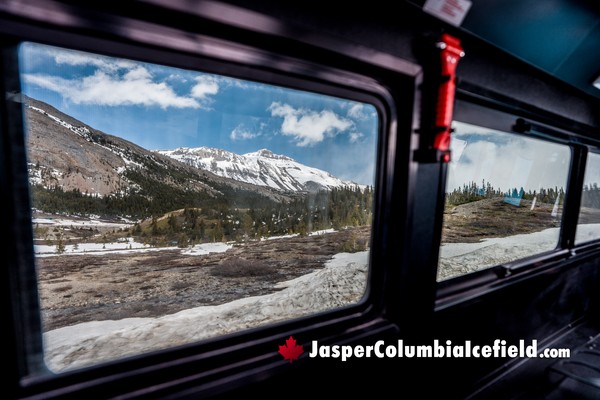
Views from inside the Columbia Icefield Fat Truck feel immersive and constantly changing, with the large panoramic windows turning the vehicle into a moving observation platform across rugged glacial terrain. Because the Fat Truck sits elevated on massive low-pressure tires, passengers gain a higher perspective over rocky moraine fields, shallow meltwater channels, snow patches, and rolling alpine ground that would normally feel difficult to access on foot.

As the vehicle moves deeper into the Columbia Icefield landscape, the windows frame enormous mountain scenery in nearly every direction. Jagged Rocky Mountain peaks rise sharply above the valleys while glaciers spill down distant slopes in broad rivers of white and blue ice. The terrain often feels vast and exposed, with very few signs of human development once the ride progresses away from the main visitor areas.

One of the most striking views from inside the Fat Truck is the texture of the landscape itself. Guests can clearly see how glaciers have shaped the environment over thousands of years. Smooth stone surfaces polished by moving ice, piles of broken rock left behind by retreating glaciers, and braided streams of icy meltwater create scenery that feels raw and geologically active. The terrain can appear almost prehistoric or polar in character, especially under cloudy skies or shifting mountain weather.

The elevated seating position gives passengers excellent visibility while the vehicle slowly navigates uneven alpine ground. As the Fat Truck climbs over rocky sections or crosses shallow glacial runoff areas, visitors can look directly down at the oversized tires gripping the terrain below. This creates a strong sense of connection between the vehicle and the harsh environment outside, reinforcing the expedition-like nature of the experience.

Weather and lighting dramatically influence the views during the ride. On bright days, sunlight reflects intensely off snowfields and glaciers, revealing brilliant blue tones within the ice and sharp detail across the surrounding peaks. Under overcast conditions, the landscape becomes colder and more dramatic, with mist drifting across mountainsides and glaciers blending into dark alpine clouds. Sudden weather shifts are common in the Columbia Icefield region, so passengers may witness changing visibility, moving shadows, and shifting mountain light throughout the journey.

Passengers also gain close-up perspectives of glacial runoff systems and alpine drainage channels. Meltwater streams often cut through the terrain in winding patterns, carrying icy water across gravel flats and rocky valleys. These smaller landscape details become highly visible from inside the Fat Truck because of the vehicle's slow pace and ability to travel close to rugged natural features.

Inside the cabin, the windows help create a feeling of exposure to the environment without fully leaving the shelter of the vehicle. Guests remain warm and protected while still feeling visually connected to the cold alpine wilderness outside. This balance allows visitors to comfortably observe a landscape that otherwise feels remote, windswept, and unforgiving.

The views from inside the Fat Truck combine glacier scenery, towering mountain ranges, rugged alpine terrain, and constantly changing weather into a deeply immersive Rocky Mountain experience. Rather than simply looking at the Columbia Icefield from a distance, passengers feel surrounded by it as the expedition vehicle slowly moves through one of the most dramatic high-altitude environments in Canada. Book the Fat Truck Ice Odyssey

Riding along the Glacier on the Columbia Icefield Fat Truck Ice Odyssey

Rather than simply viewing a glacier from a lookout, the Fat Truck Ice Odyssey places visitors directly within the glacier environment, surrounded by one of the Canadian Rockies' most dramatic and enduring natural landscapes.

Riding along the Glacier on the Columbia Icefield Fat Truck Ice Odyssey
Road along the Columbia Icefield Fat Truck Ice Odyssey

Riding along the Glacier on the Columbia Icefield Fat Truck Ice Odyssey

Riding along the glacier on the Columbia Icefield Fat Truck Ice Odyssey feels remarkably close to entering a frozen wilderness shaped entirely by ice, wind, and extreme mountain weather. As the Fat Truck advances deeper into the Columbia Icefield terrain, the surrounding environment becomes increasingly dominated by glacial features - towering icefields in the distance, exposed ancient ice, meltwater streams, and rugged moraine left behind by centuries of glacier movement.

The experience becomes especially dramatic as the vehicle travels beside the glacier itself. From inside the Fat Truck, passengers can observe the immense scale of the ice far more intimately than from roadside viewpoints. The glacier appears alive in the landscape, stretching across the mountain basin in layered textures of white, silver, pale blue, and compressed ice. Cracks, ridges, and frozen contours reveal the glacier's slow but powerful movement through the valley over thousands of years.

The Fat Truck's oversized tires roll steadily across rocky glacial deposits and uneven alpine ground while passengers remain elevated above the terrain. The vehicle moves slowly and deliberately, allowing guests time to absorb the details of the glacier environment. In some areas, visitors can see icy meltwater flowing through channels carved into the moraine, while nearby rock surfaces appear polished smooth by the tremendous force of moving ice over time.

One of the most memorable aspects of riding beside the glacier is the feeling of scale. The glacier walls and surrounding peaks often dwarf both the vehicle and the people inside it. Massive mountain faces rise above the icefield while snow and ice cling to high elevations even during summer months. The farther the ride progresses, the more the modern world disappears, replaced by a harsh alpine landscape that feels ancient and largely untouched.

The sounds during the ride also contribute to the atmosphere. Inside the cabin, passengers hear the deep mechanical hum of the Fat Truck and the crunch of tires crossing gravel, stone, and frozen ground. Outside, there may be only the sound of wind sweeping across the glacier basin and meltwater moving beneath the cold mountain air. The silence of the surrounding environment often surprises visitors because of how isolated and expansive the terrain feels.

Lighting conditions can dramatically transform the glacier scenery throughout the excursion. Bright sunlight may illuminate vivid blue tones deep within the ice while reflecting sharply across snowfields and wet glacial surfaces. Under cloud cover, the glacier can appear darker and more imposing, blending into mist and shadow beneath towering peaks. Rapidly changing mountain weather often adds a sense of unpredictability and realism to the expedition atmosphere.

As the Fat Truck rides alongside the glacier, guides frequently explain how the Columbia Icefield feeds multiple glacier systems and waterways across western Canada. Visitors gain a stronger appreciation for the glacier not simply as scenery, but as a dynamic natural force that continues shaping valleys, rivers, and ecosystems throughout the Rockies.

The overall sensation of traveling beside the glacier is both peaceful and powerful. The slow movement of the vehicle encourages observation and reflection, while the immense frozen landscape surrounding the route creates a feeling of genuine alpine exploration. Rather than simply viewing a glacier from a lookout, the Fat Truck Ice Odyssey places visitors directly within the glacier environment, surrounded by one of the Canadian Rockies' most dramatic and enduring natural landscapes.

Road along the Columbia Icefield Fat Truck Ice Odyssey

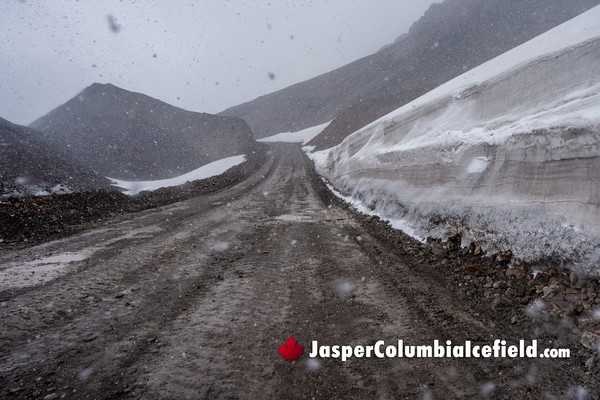
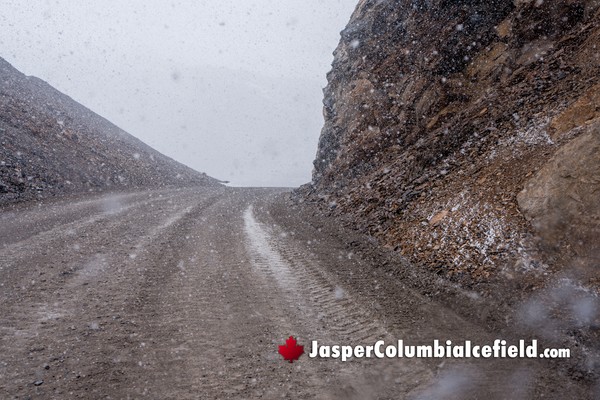
The road along the Columbia Icefield Fat Truck Ice Odyssey is less a conventional roadway and more a rugged alpine expedition route carved through one of the harshest mountain environments in the Canadian Rockies. Rather than smooth pavement or traditional sightseeing roads, the route consists of uneven glacial terrain shaped by ice, meltwater, frost, and shifting mountain conditions. Every section of the path feels engineered specifically for specialized all-terrain vehicles capable of handling remote and unstable surfaces.

As the Fat Truck begins traveling along the route, passengers quickly notice how different the terrain feels from normal mountain highways. The expedition path crosses rocky moraine fields, compact gravel, shallow meltwater crossings, muddy sections, and patches of lingering snow depending on the season. The oversized low-pressure tires absorb much of the uneven ground, allowing the vehicle to move steadily across terrain that would stop ordinary vehicles almost immediately.

The route itself winds through an expansive glacier basin surrounded by towering peaks and massive icefields. In some sections, the road appears narrow and isolated against the enormous surrounding landscape, emphasizing how remote the environment truly is. Passengers often look out the windows and see little evidence of modern development beyond the carefully guided expedition path itself. The feeling is closer to crossing Arctic wilderness than driving a tourist route.

The surface conditions constantly change along the journey. Some stretches are firm and rocky, while others feel softer from glacial runoff and alpine moisture. Meltwater streams may cut across portions of the route, creating reflective channels of icy water that the Fat Truck slowly rolls through with ease. During colder conditions or shoulder seasons, frost, slush, or patches of snow can add even more texture to the ride.

The road also reveals the immense geological power of the Columbia Icefield region. Guests can see how glaciers have scraped and sculpted the terrain over thousands of years, leaving behind smoothed rock faces, piles of shattered stone, and long ridges of moraine deposited by retreating ice. Riding across this landscape gives passengers a direct connection to the natural forces that continue shaping the mountains today.

Despite the rugged conditions, the route is carefully managed for safety and environmental protection. The Fat Truck travels deliberately and at controlled speeds, allowing guests to comfortably experience the terrain while minimizing disturbance to the fragile alpine environment. The slow pace also gives visitors time to observe small landscape details that would be missed on faster roads - flowing meltwater, scattered alpine vegetation, exposed glacial stone, and shifting weather patterns moving across the peaks.

The atmosphere along the route changes dramatically depending on weather and light. Bright conditions reveal sweeping glacier views and sparkling icefields, while clouds and mist can transform the road into a cold, dramatic corridor through an almost polar-looking wilderness. Even in summer, the high elevation and proximity to the glacier often create chilly winds and rapidly changing mountain conditions.

The road along the Columbia Icefield Fat Truck Ice Odyssey is part of the adventure itself. It is not simply a means of transportation, but an immersive route through rugged glacial terrain that allows visitors to experience the scale, isolation, and raw natural power of the Columbia Icefield environment from deep within the alpine landscape. Book the Fat Truck Ice Odyssey

Fat Truck Ascends Higher than the Buses on Athabasca Glacier

While the Athabasca Glacier buses provide the iconic experience of traveling directly onto the glacier surface, the Fat Truck Ice Odyssey offers a more rugged off-road alpine exploration that can feel higher, wilder, and more expedition-oriented as it ascends through the surrounding glacial landscape.

Fat Truck Ascends Higher than the Buses during the Columbia Icefield Fat Truck Ice Odyssey
Visitors on the Athabasca Glacier Columbia Icefield Fat Truck Ice Odyssey

Fat Truck Ascends Higher than the Buses on Athabasca Glacier

The Columbia Icefield Fat Truck Ice Odyssey can create the impression of ascending into more rugged and elevated alpine terrain compared to the larger glacier buses operating on the Athabasca Glacier. While the traditional Ice Explorer buses focus primarily on driving directly onto the glacier surface itself, the Fat Truck experience emphasizes off-road exploration across varied mountain terrain surrounding the glacier environment. This gives the excursion a more expedition-like feeling, with routes that often traverse elevated moraine, rocky ridges, uneven alpine surfaces, and remote glacial approaches.

From inside the Fat Truck, passengers frequently feel as though they are climbing deeper into the mountain landscape because of the vehicle's ability to crawl across terrain inaccessible to larger heavy vehicles. The oversized low-pressure tires allow the Fat Truck to navigate steep, uneven, and softer ground conditions while maintaining stability. As the vehicle slowly ascends across moraine slopes and elevated glacial terrain, the views outward often become broader and more dramatic, opening toward surrounding peaks, valleys, and the icefield basin below.

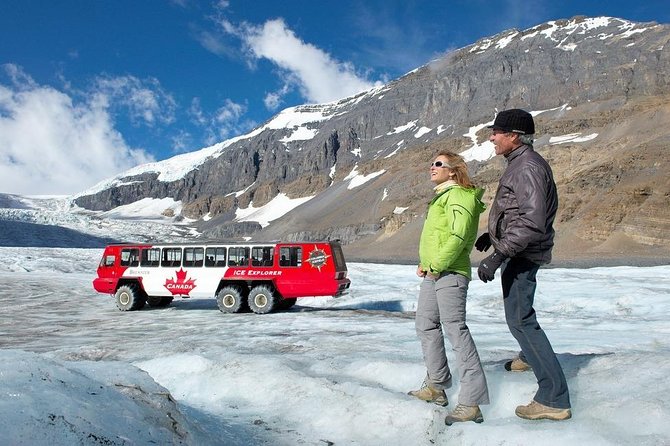
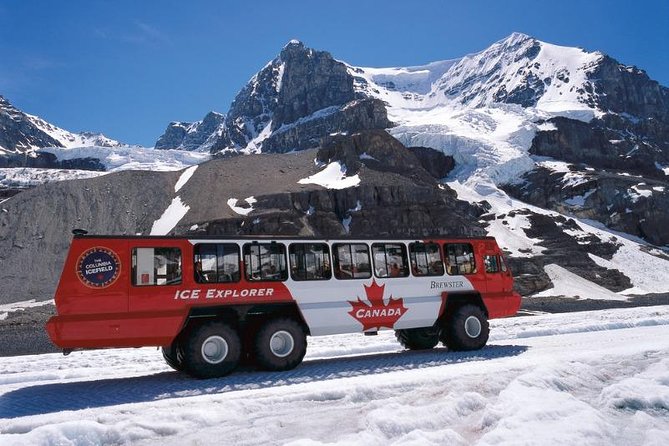
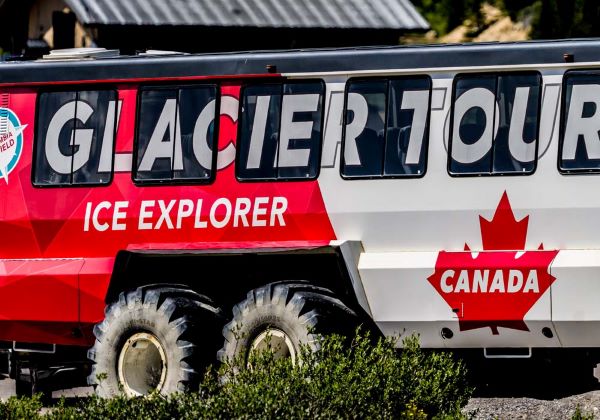
The traditional glacier buses on the Athabasca Glacier deliver a very different sensation. Those massive Ice Explorers are specifically designed to descend onto the glacier surface itself, where visitors experience standing directly on ancient ice. Their routes are carefully managed across the glacier and focus more on the glacier encounter than on off-road alpine exploration. The Fat Truck, by contrast, feels more agile and exploratory, moving through varied terrain surrounding the glacier environment rather than concentrating solely on the ice surface.

Because the Fat Truck travels through rocky moraine and elevated alpine areas, passengers may gain vantage points where they can look outward across sections of the glacier system and surrounding mountain landscape from above or alongside the ice. This creates a strong sense of immersion in the wider Columbia Icefield environment rather than only the glacier itself. The constantly changing terrain - rocky climbs, glacial runoff paths, snow patches, and elevated ridges - contributes to the feeling of ascending into increasingly remote high-altitude wilderness.

The experience also feels visually different due to the smaller scale of the vehicle. The Fat Truck sits high above its enormous tires, giving passengers a commanding perspective over the terrain immediately below them. As it climbs across uneven ground, visitors can watch the vehicle carefully navigate rocks, slopes, and glacial debris fields while massive mountains surround the route in every direction.

Weather and visibility can further amplify the sensation of elevation during the ride. Cold winds, drifting clouds, and expansive glacier panoramas often make the higher terrain feel isolated and arctic in character. On clear days, the elevated views can reveal sweeping mountain ranges, ice-covered valleys, and distant glaciers extending far into the Rockies.

While the Athabasca Glacier buses provide the iconic experience of traveling directly onto the glacier surface, the Fat Truck Ice Odyssey offers a more rugged off-road alpine exploration that can feel higher, wilder, and more expedition-oriented as it ascends through the surrounding glacial landscape.

Visitors on the Athabasca Glacier Columbia Icefield Fat Truck Ice Odyssey

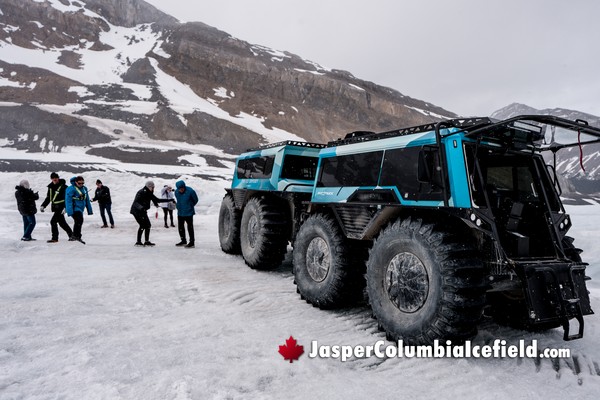
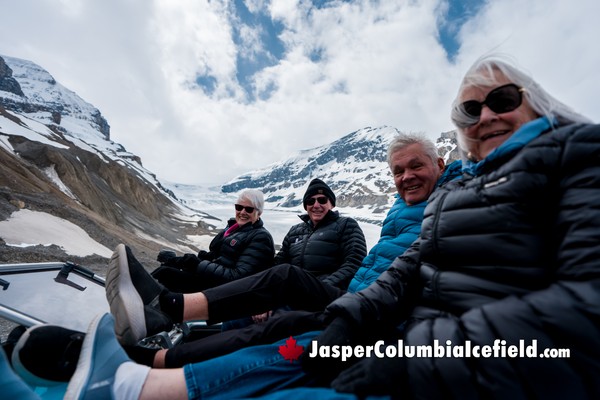
Visitors on the Athabasca Glacier Columbia Icefield Fat Truck Ice Odyssey often experience a mix of excitement, curiosity, and awe as they enter one of the most rugged glacier environments in the Canadian Rockies. The excursion attracts a wide variety of travelers, including families, photographers, outdoor enthusiasts, international tourists, and visitors seeking a more adventurous alternative to traditional sightseeing experiences.

Before departure, guests typically gather near the expedition staging area dressed in layered outdoor clothing suitable for rapidly changing alpine conditions. Even during summer, the glacier environment can feel surprisingly cold because of the elevation, nearby icefields, and strong mountain winds. Visitors frequently arrive carrying cameras, warm jackets, hats, and sunglasses while taking in the dramatic glacier scenery surrounding the boarding area.

As passengers climb into the Fat Truck, many are immediately fascinated by the vehicle itself. The oversized balloon tires, elevated suspension, and compact expedition styling create the impression of a machine designed for Arctic exploration. Guests often pause to examine the unusual engineering and take photographs before boarding. The vehicle's rugged appearance adds to the anticipation of entering terrain inaccessible to normal sightseeing vehicles.

Inside the cabin, visitors settle into elevated seating surrounded by large panoramic windows. Conversations often quiet down once the vehicle begins moving into the alpine terrain. Passengers become absorbed by the changing scenery outside - glaciers, rocky moraine fields, meltwater channels, snow patches, and towering mountain walls surrounding the Columbia Icefield basin.

During the ride, visitors frequently react to the scale of the environment. The glacier landscape feels immense and exposed, with very little visible development beyond the expedition route itself. Guests often photograph the surrounding peaks and icefields while listening to guides explain the geological history of the glacier system, climate conditions, and the immense natural forces that continue shaping the terrain.

Families with children are often especially captivated by the Fat Truck's unusual movement across the rough ground. The slow climbing motion, floating sensation from the oversized tires, and occasional crossing of rocky or wet terrain make the journey feel adventurous without becoming extreme. Many passengers describe the experience as feeling closer to a scientific expedition than a typical guided tour.

Photographers and nature enthusiasts tend to focus on the details of the glacier environment - the textures of ancient ice, the shifting mountain light, glacial runoff streams, and the contrast between snow-covered slopes and exposed rock. Weather changes can dramatically alter the mood of the landscape, and visitors often find themselves watching clouds move across the peaks or sunlight reflecting brightly off the icefields.

One of the most memorable aspects for many guests is the sense of isolation and exposure to the alpine wilderness. As the Fat Truck travels farther into the glacier terrain, visitors frequently comment on how distant the modern world feels. The combination of silence, cold air, immense glaciers, and towering mountains creates an atmosphere that feels both peaceful and powerful.

Visitors on the Athabasca Glacier Columbia Icefield Fat Truck Ice Odyssey experience far more than a simple sightseeing ride. The excursion immerses guests in a harsh and spectacular glacier environment where specialized expedition vehicles, dramatic mountain scenery, and close proximity to ancient ice combine to create a memorable high-alpine adventure in the heart of the Canadian Rockies. Book the Fat Truck Ice Odyssey

Canadian Made Fat Truck

The Fat Truck has also become recognized as a modern example of Canadian off-road engineering innovation - a vehicle developed specifically to handle the demanding geography, cold weather, and remote terrain found throughout Canada's mountains and northern regions.

Canadian Made Fat Truck Ice Odyssey
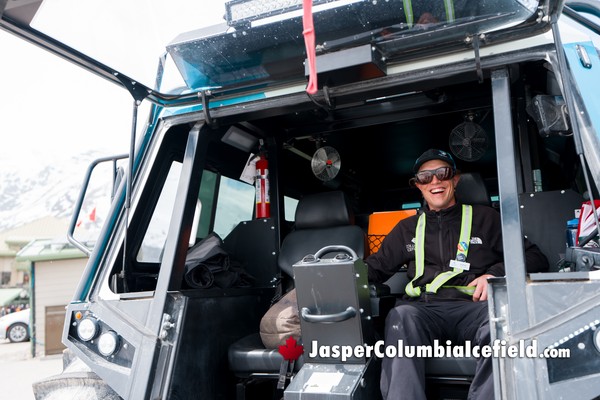
Fat Truck Captain on the Columbia Icefield Ice Odyssey

Canadian Made Fat Truck Ice Odyssey

Yes - the Fat Truck is a Canadian-made all-terrain expedition vehicle designed and manufactured in Québec, Canada. It was specifically engineered for harsh environments such as snowfields, glaciers, alpine terrain, mud, wetlands, remote industrial sites, and northern wilderness conditions. Its Canadian origins are reflected in both its rugged design and its ability to operate in extreme climates and difficult landscapes.

The vehicle was created with a strong focus on low ground pressure, stability, flotation, and off-road mobility. Its oversized low-pressure tires allow it to travel across soft or uneven terrain that would stop ordinary vehicles. This makes the Fat Truck especially effective in environments like the Columbia Icefield, where rocky moraine, glacial runoff, snow patches, and alpine mud require specialized transportation.

One of the reasons the Fat Truck stands out is because it was not designed as a recreational toy or high-speed off-road machine. Instead, it was engineered as a practical expedition and utility vehicle for real-world Canadian conditions. Industries such as search and rescue, mining, forestry, hydro operations, and remote-access transportation use similar vehicles because they can reach isolated areas safely and reliably.

The design itself immediately gives off a distinctly Canadian wilderness character. The enclosed cabin, massive balloon-style tires, elevated stance, and rugged construction make it look prepared for Arctic or mountain expeditions. Even the driving system is unconventional, using joystick-style controls that allow smooth maneuvering over difficult terrain.

On the Columbia Icefield Ice Odyssey experience, the Fat Truck fits naturally into the alpine glacier environment because it was built for exactly these kinds of conditions. The vehicle's ability to move steadily across unstable glacial terrain while keeping passengers comfortable is part of what makes the excursion feel authentic and adventurous.

The Fat Truck has also become recognized as a modern example of Canadian off-road engineering innovation - a vehicle developed specifically to handle the demanding geography, cold weather, and remote terrain found throughout Canada's mountains and northern regions. Book the Fat Truck Ice Odyssey

Athabasca Glacier History on the Columbia Icefield Fat Truck Ice Odyssey

Despite its gradual retreat, the Athabasca Glacier remains an awe-inspiring natural feature. Towering mountain peaks, expansive icefields, cold alpine winds, and rugged moraine landscapes continue to make the region feel wild and ancient. The glacier stands as both a geological monument to the Ice Age and a living reminder of the immense natural forces that continue shaping the Rocky Mountains today.

Guide and Captain talking about History Columbia Icefield Fat Truck Ice Odyssey
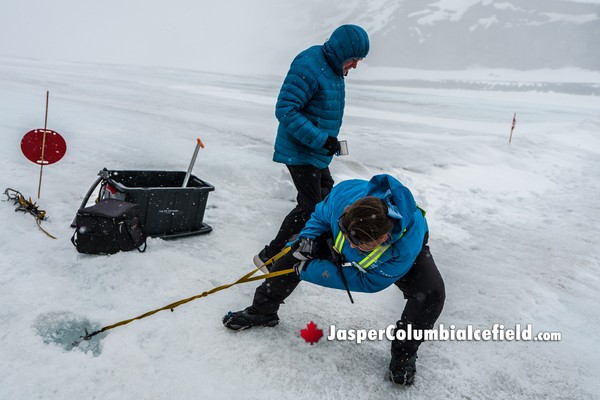
Ice Pick Demonstration on the Columbia Icefield Fat Truck Ice Odyssey

Athabasca Glacier History on the Columbia Icefield Fat Truck Ice Odyssey

The Athabasca Glacier is one of the most famous and accessible glaciers in North America and forms part of the immense Columbia Icefield in the Canadian Rockies. Located within Athabasca Glacier, the glacier has shaped the surrounding mountains and valleys for thousands of years through the slow movement of ice, erosion, and meltwater.

The glacier itself originated during colder climatic periods when heavy snowfall accumulated high in the mountains faster than it could melt. Over immense stretches of time, layers of compressed snow transformed into dense glacial ice. Gravity slowly pushed this ice downhill through the valleys, carving the dramatic alpine landscape visible today. The Athabasca Glacier became one of the major outlet glaciers flowing from the much larger Columbia Icefield, one of the largest ice masses south of the Arctic Circle in North America.

For Indigenous peoples, the surrounding mountain regions held deep cultural and travel significance long before European exploration. The valleys and passes near the glacier formed part of traditional travel and trade routes through the Rockies. The harsh glacier environment was respected as a powerful natural landscape shaped by extreme weather, ice, and elevation.

European exploration of the area increased during the nineteenth century as surveyors, fur traders, geologists, and mountaineers entered the Rockies. Early explorers were struck by the immense scale of the glacier and the surrounding icefield. Scientific interest grew rapidly because the Athabasca Glacier provided a rare opportunity to study glacial movement, alpine geology, and mountain climate in a relatively accessible location.

During the early twentieth century, the glacier became increasingly well known as roads and tourism infrastructure expanded through the Canadian Rockies. The construction of the Icefields Parkway between Banff and Jasper transformed access to the region. Travelers could now witness the glacier directly from the roadway, making it one of the most photographed and visited glacier destinations in Canada.

As tourism developed, guided glacier experiences became an important part of the Columbia Icefield region. Specialized vehicles were eventually introduced to allow visitors to safely travel onto or near sections of the glacier terrain. Over time, these experiences evolved into modern glacier tours, interpretive programs, and alpine expedition-style excursions such as the Ice Odyssey experiences operating today.

One of the most significant aspects of the Athabasca Glacier's modern history is its visible retreat. Like many glaciers worldwide, the Athabasca Glacier has gradually receded over the past century due to long-term climate warming. Historical photographs and interpretive markers in the region show how much farther down the valley the glacier once extended. Areas now occupied by exposed rock and glacial moraine were previously covered by thick ice only decades ago.

The glacier continues to serve as an important scientific and environmental observation site. Researchers study the glacier to better understand climate patterns, meltwater systems, ice dynamics, and long-term environmental change within the Canadian Rockies. Visitors today often gain both a scenic and educational appreciation for how glaciers shape landscapes and how sensitive these environments are to changing temperatures.

Despite its gradual retreat, the Athabasca Glacier remains an awe-inspiring natural feature. Towering mountain peaks, expansive icefields, cold alpine winds, and rugged moraine landscapes continue to make the region feel wild and ancient. The glacier stands as both a geological monument to the Ice Age and a living reminder of the immense natural forces that continue shaping the Rocky Mountains today. Book the Fat Truck Ice Odyssey

Enjoy Views from the Roof during the Columbia Icefield Fat Truck Ice Odyssey

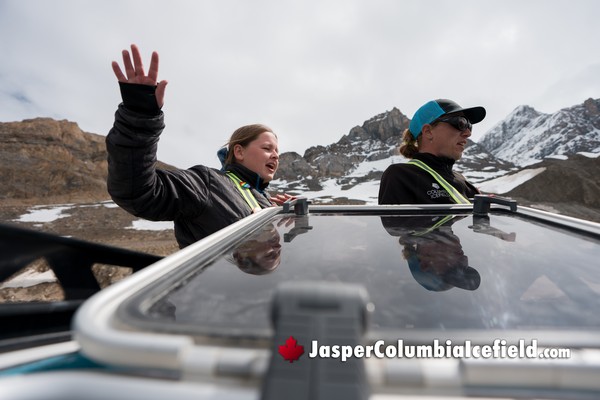
Enjoying the views from the Fat Truck roof area during the Ice Odyssey transforms the excursion from simple sightseeing into a true high-alpine glacier experience. The combination of elevation, cold mountain air, expansive icefield scenery, and the immense scale of the Canadian Rockies creates a memorable feeling of standing deep within one of Canada's most dramatic wilderness landscapes.

Enjoy Views from the Roof during the Columbia Icefield Fat Truck Ice Odyssey
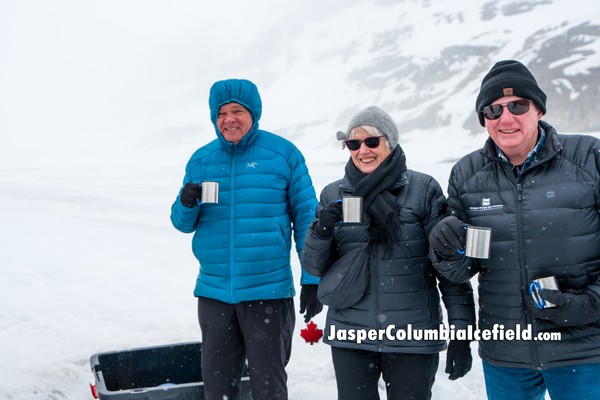
Warm Up with Tea on the Columbia Icefield Fat Truck Ice Odyssey

Enjoy Views from the Roof during the Columbia Icefield Fat Truck Ice Odyssey

Enjoying the views from the roof area of the Columbia Icefield Fat Truck Ice Odyssey creates one of the most immersive perspectives of the glacier environment. Elevated above the rugged alpine terrain, visitors gain sweeping panoramic views across the Columbia Icefield region, surrounded by glaciers, towering Rocky Mountain peaks, snowfields, and wide open alpine valleys that seem to stretch endlessly into the distance.

From the elevated position atop or near the roof viewing area, the scale of the landscape becomes even more dramatic. The glacier terrain spreads outward in all directions, revealing rocky moraine fields, braided meltwater channels, exposed ancient ice, and rugged mountain ridges shaped by thousands of years of glacial movement. The higher perspective allows guests to fully appreciate how enormous and powerful the Columbia Icefield environment truly is.

The cold alpine air is often one of the first things visitors notice while enjoying the roof views. Even in summer, glacial winds can feel crisp and refreshing because of the elevation and nearby icefields. The atmosphere feels raw and natural, with very little separating visitors from the surrounding wilderness. On clear days, sunlight reflects brilliantly off the ice and snow while shadows move across the mountainsides, constantly changing the appearance of the landscape.

Photographers especially enjoy the elevated viewing experience because the roof vantage point offers broad unobstructed sightlines over the glacier basin. Massive peaks rise sharply beyond the icefield while distant glaciers cling to the mountain slopes. Depending on weather conditions, visitors may witness dramatic cloud formations drifting across the summits or bright blue tones emerging from cracks and compressed sections of glacier ice.

The feeling from the roof area is often described as peaceful yet powerful. There is a remarkable sense of isolation in the alpine environment. Away from forests and towns, the landscape feels ancient and elemental - dominated by rock, ice, wind, and open sky. When the vehicle pauses, the surrounding silence can be striking, interrupted only by wind crossing the glacier basin or distant meltwater flowing through rocky channels.

The elevated views also help visitors understand the larger geography of the Columbia Icefield region. From above, guests can observe how glaciers descend through mountain valleys, how meltwater systems spread across the terrain, and how the rugged alpine environment transitions between snowfields, exposed rock, and glacial moraine.

Enjoying the views from the Fat Truck roof area during the Ice Odyssey transforms the excursion from simple sightseeing into a true high-alpine glacier experience. The combination of elevation, cold mountain air, expansive icefield scenery, and the immense scale of the Canadian Rockies creates a memorable feeling of standing deep within one of Canada's most dramatic wilderness landscapes.

Warm Up with Tea on the Columbia Icefield Fat Truck Ice Odyssey

Warming up with tea during the Columbia Icefield Fat Truck Ice Odyssey adds a welcome sense of comfort against the cold alpine environment surrounding the glacier terrain. After spending time riding through rugged moraine, icy winds, and the vast open landscape of the Columbia Icefield, holding a warm drink in the middle of such a harsh mountain setting feels especially relaxing and memorable.

The contrast between the cold glacier air outside and the warmth of a hot tea inside the expedition atmosphere becomes part of the experience itself. Visitors often return from viewing areas or roof viewpoints with chilled hands and rosy cheeks from the mountain winds, making the warmth of tea feel even more satisfying. Steam rising from the cup while glaciers and snowfields remain visible through the windows creates a distinctly alpine moment that many guests remember long after the excursion ends.

The glacier environment can feel surprisingly cold even during summer months because of the elevation and nearby icefields. Winds sweeping across the open terrain often carry a sharp chill, especially when clouds move over the mountains or weather shifts quickly. A warm drink helps visitors settle in comfortably while continuing to enjoy the surrounding scenery and interpretive experience.

Inside the Fat Truck or nearby staging areas, tea breaks also create a quieter, more relaxed atmosphere during the excursion. Guests often pause to absorb the views, talk about the glacier landscape, or simply enjoy the silence and remoteness of the environment while warming up. The combination of rugged expedition travel and simple comforts like hot tea contributes to the feeling that the Ice Odyssey is both adventurous and welcoming.

Sipping tea while overlooking glaciers, alpine valleys, and towering Rocky Mountain peaks reinforces the sense of being immersed deep within the Canadian Rockies. The experience combines wilderness exploration with moments of warmth and calm that balance the rawness of the glacier terrain outside. Book the Fat Truck Ice Odyssey

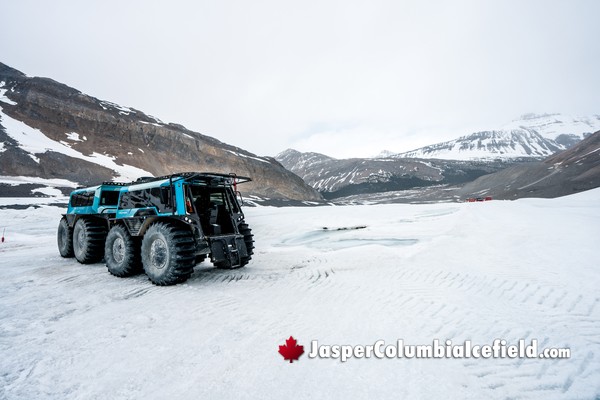
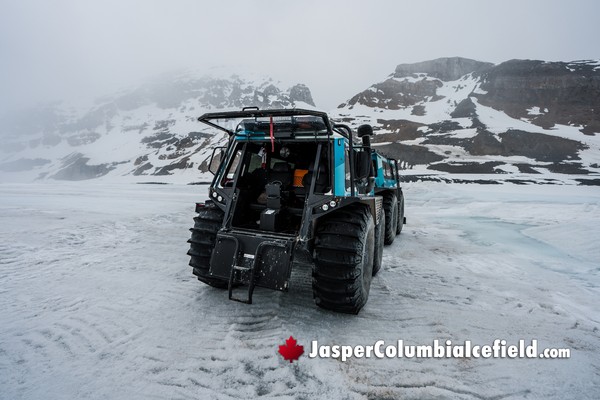
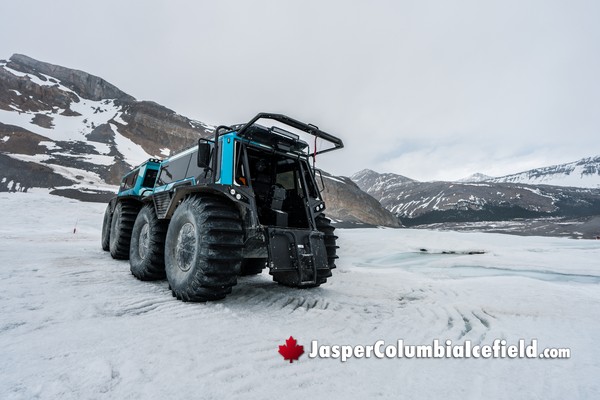
Fat Truck on the Athabasca Glacier during the Ice Odyssey

One of the most striking aspects of seeing the Fat Truck on the Athabasca Glacier is how small the vehicle appears compared to the immense landscape surrounding it. The Athabasca glacier basin and Columbia Icefield region dwarf the expedition vehicle, emphasizing the sheer scale of the Canadian Rockies and the ancient ice systems flowing through the mountains.

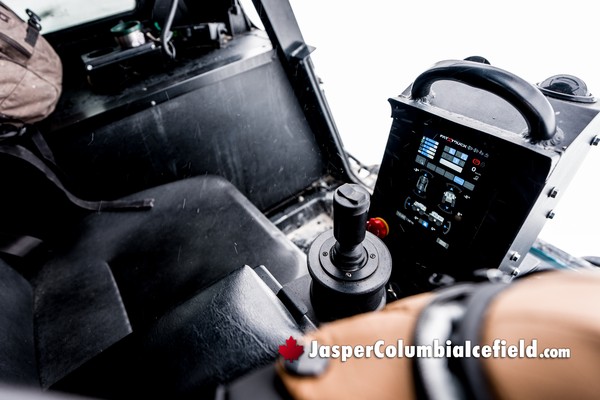
Fat Truck Controls Columbia Icefield Ice Odyssey
Fat Truck on the Athabasca Glacier during the Ice Odyssey

Fat Truck on the Athabasca Glacier during the Ice Odyssey

The Fat Truck on the Athabasca Glacier creates a uniquely rugged glacier exploration experience that feels far more like a remote alpine expedition than a conventional sightseeing tour. Surrounded by ancient ice, towering Rocky Mountain peaks, and the immense Columbia Icefield landscape, the specialized all-terrain vehicle appears perfectly suited for the harsh environment it operates within.

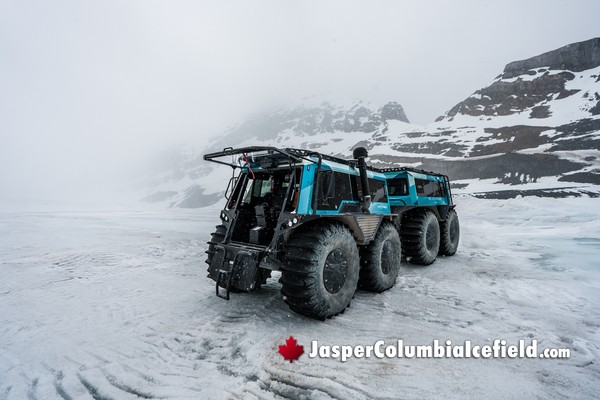
The Fat Truck itself immediately stands out against the glacier terrain. Its oversized low-pressure tires, elevated suspension, enclosed expedition-style cabin, and compact rugged body give it the appearance of a machine built for Arctic exploration. Against the white and gray tones of the glacier basin, the vehicle looks engineered specifically to conquer snow, ice, rocky moraine, and glacial runoff areas that ordinary vehicles could never safely cross.

As the Fat Truck moves across terrain near the Athabasca Glacier, passengers experience the landscape at a slower and more immersive pace. The oversized tires roll steadily over uneven glacial deposits, compact snow, rocky ground, and icy meltwater channels while absorbing much of the roughness beneath the vehicle. The movement feels controlled and deliberate, allowing visitors to fully appreciate the scale and texture of the glacier environment surrounding them.

The views during the journey are dramatic from every direction. Ancient ice stretches outward beneath towering mountain walls while distant snowfields cling to the surrounding peaks. The glacier surface and adjacent moraine reveal layers of geological history shaped by centuries of ice movement, freezing temperatures, and seasonal meltwater. In many areas, the terrain feels almost polar or lunar in character, with exposed rock, scattered snow, and broad open alpine spaces extending toward the horizon.

One of the most striking aspects of seeing the Fat Truck on the Athabasca Glacier is how small the vehicle appears compared to the immense landscape surrounding it. The Athabasca glacier basin and Columbia Icefield region dwarf the expedition vehicle, emphasizing the sheer scale of the Canadian Rockies and the ancient ice systems flowing through the mountains.

Fat Truck Controls Columbia Icefield Ice Odyssey

The controls of the Fat Truck are designed very differently from traditional off-road vehicles or highway trucks. Instead of relying heavily on a steering wheel, complicated gear systems, or aggressive pedal controls, the Fat Truck uses a simplified control layout engineered specifically for slow, stable travel across difficult terrain such as snow, mud, glaciers, wetlands, rocky moraine, and alpine environments.

One of the most distinctive features is the joystick-style steering system. Rather than turning a large steering wheel continuously, the operator uses joystick controls to guide the vehicle's direction and movement. This setup allows smooth maneuvering over uneven terrain while reducing the physical effort required to control the vehicle in harsh conditions. The steering system is especially useful when crawling through tight or unstable environments where precise low-speed control is more important than speed.

The Fat Truck is built around hydrostatic drive principles, meaning power delivery is designed for controlled traction rather than rapid acceleration. The operator can carefully regulate movement while climbing rocky slopes, crossing shallow meltwater channels, or traveling across snow and glacial surfaces. This makes the ride feel steady and deliberate rather than fast or aggressive.

Inside the cabin, the driver controls are arranged for practical expedition use. The layout emphasizes visibility, stability, and ease of operation in remote environments. Large windows help the operator monitor surrounding terrain while maintaining awareness of obstacles, slopes, and changing ground conditions. The elevated seating position also gives excellent visibility over the oversized tires and rugged terrain below.

Because the Fat Truck is engineered for extreme environments, its controls are designed to work reliably in cold weather, wet conditions, and remote wilderness settings. The vehicle prioritizes low-speed capability, flotation, traction, and stability rather than conventional highway driving characteristics. This is why the Fat Truck can move effectively across terrain that would trap or damage ordinary vehicles.

Passengers riding inside the vehicle often notice how smoothly the Fat Truck handles difficult surfaces despite the rugged landscape outside. The joystick steering and controlled power delivery allow the vehicle to crawl steadily over rocks, glacial moraine, snow patches, mud, and uneven alpine ground while maintaining a surprisingly stable ride.

The Fat Truck controls reflect the vehicle's expedition-focused purpose. Every part of the system is engineered around safe, controlled movement through extreme terrain, making it well suited for glacier environments like the Columbia Icefield and other remote Canadian wilderness landscapes. Book the Fat Truck Ice Odyssey

Ice Odyssey Fat Truck Details

The Ice Odyssey Fat Truck combines Canadian off-road engineering, glacier expedition capability, and alpine sightseeing into a unique exploration vehicle purpose-built for one of the most dramatic glacier environments in North America.

Canadian Made Fat Truck Details Ice Odyssey
On Athabasca Glacier via Fat Truck Columbia Icefield Ice Odyssey

Ice Odyssey Fat Truck Details

The Ice Odyssey Fat Truck is a specialized all-terrain expedition vehicle designed for operating in extreme glacier and alpine environments surrounding the Columbia Icefield and Athabasca Glacier. Built for rugged wilderness conditions, the vehicle combines oversized flotation tires, elevated suspension, enclosed passenger seating, and low-speed precision handling to safely navigate terrain that ordinary vehicles could never cross.

One of the most recognizable details of the Fat Truck is its enormous low-pressure tires. These oversized balloon-style tires are specifically engineered to spread the vehicle's weight across soft or unstable surfaces such as snow, mud, glacial moraine, rocky alpine ground, and meltwater terrain. This low ground pressure allows the Fat Truck to travel steadily without sinking deeply into fragile terrain.

The vehicle has a compact expedition-style body with a high ground clearance that gives it a distinctly Arctic or polar exploration appearance. Its elevated stance allows it to climb over rough terrain, uneven rocks, shallow runoff channels, and snow-covered surfaces while maintaining passenger stability. The design emphasizes capability and durability rather than speed.

Inside the cabin, the Fat Truck is configured for small-group glacier excursions. Large panoramic windows provide wide views of glaciers, mountain peaks, alpine valleys, and surrounding icefield terrain. The enclosed cabin helps shield passengers from cold winds, glacial weather, and changing alpine conditions while still maintaining an immersive connection to the landscape outside.

The seating arrangement is expedition-oriented and practical, designed to keep passengers secure while the vehicle slowly crawls through rugged terrain. Because the ride operates at deliberate low speeds, visitors can comfortably observe the glacier environment, photography opportunities, and geological features throughout the journey.

A major technical detail of the Fat Truck is its joystick-style steering system. Instead of relying entirely on a conventional steering wheel setup, the operator uses simplified controls engineered for precise movement over difficult ground. This allows smooth maneuvering across rocky moraine, muddy surfaces, snowfields, and uneven glacier terrain where careful traction control is essential.

The Fat Truck is also amphibious in design, meaning its sealed body and flotation capabilities allow it to cross shallow water and wet environments safely. This capability reflects the vehicle's broader purpose as a machine built for remote wilderness operations, northern environments, and unstable terrain conditions.

Unlike high-speed off-road vehicles, the Fat Truck is engineered around controlled traction and stability. Its hydrostatic drive system delivers steady low-speed power ideal for glacier exploration, alpine expeditions, industrial access, search and rescue operations, and remote transportation in harsh climates.

On the Ice Odyssey experience, the Fat Truck typically carries much smaller groups than the larger glacier buses operating elsewhere on the Columbia Icefield. This smaller scale creates a quieter and more personal atmosphere, allowing visitors to feel more connected to the glacier environment and guides throughout the journey.

Another defining detail is the vehicle's ability to access rugged terrain surrounding the Athabasca Glacier that feels remote and isolated. The Fat Truck can traverse rocky ridges, moraine slopes, meltwater channels, snow patches, and uneven alpine surfaces while giving passengers a strong sense of expedition travel deep within the Canadian Rockies.

The Ice Odyssey Fat Truck combines Canadian off-road engineering, glacier expedition capability, and alpine sightseeing into a unique exploration vehicle purpose-built for one of the most dramatic glacier environments in North America.

On Athabasca Glacier via Fat Truck Columbia Icefield Ice Odyssey

Traveling on the Athabasca Glacier via the Fat Truck feels like entering a remote frozen wilderness where the landscape is shaped almost entirely by ice, rock, wind, and elevation. The specialized expedition vehicle slowly carries visitors into the glacier environment itself, moving across rugged alpine terrain that feels far removed from ordinary roads or traditional sightseeing experiences.

As the Fat Truck approaches the glacier, the surrounding scenery becomes increasingly dramatic. Massive ice formations spread across the valley while towering Rocky Mountain peaks rise sharply above the glacier basin. The environment feels immense and exposed, with cold alpine air and broad open spaces stretching outward in every direction.

The Fat Truck's oversized low-pressure tires allow the vehicle to move steadily across uneven moraine, compact snow, rocky glacial deposits, shallow meltwater channels, and icy surfaces near the Athabasca Glacier. The ride is slow and deliberate, emphasizing stability and immersion rather than speed. Passengers often notice a floating sensation as the massive tires absorb the roughness of the terrain beneath the vehicle.

From inside the panoramic-window cabin, visitors gain close views of the glacier landscape that feel far more intimate than roadside viewpoints. Ancient ice appears layered and textured, with shades of white, silver, and pale blue shifting depending on weather and sunlight. Cracks, ridges, meltwater flows, and exposed glacial rock reveal the immense geological forces that continue shaping the region.

The atmosphere on the glacier is often surprisingly quiet. Away from highways and developed areas, visitors hear mainly the low mechanical hum of the Fat Truck, cold wind moving across the icefield, and distant sounds of flowing meltwater. The silence and openness of the environment contribute strongly to the expedition-like feeling of the experience.

The Fat Truck's elevated seating position also gives passengers commanding views over the glacier terrain. Visitors can look outward across moraine ridges, snow patches, glacial runoff channels, and surrounding mountain walls while the vehicle carefully climbs and crawls through the alpine landscape. The farther the journey progresses, the more isolated and untouched the environment appears.

Weather conditions can dramatically transform the glacier experience. Bright sunshine may illuminate brilliant blue tones within the ice and create sharp reflections across snowfields, while cloud cover can make the glacier feel colder, darker, and more Arctic in character. Even during summer, the proximity to the glacier often brings crisp temperatures and rapidly changing mountain conditions.

Guides commonly interpret the glacier environment during the excursion, explaining how the Athabasca Glacier formed, how glaciers move, and how the Columbia Icefield continues influencing rivers, valleys, and ecosystems throughout western Canada. Visitors gain both a scenic and educational appreciation for the glacier's immense scale and ongoing environmental significance.

Traveling on the Athabasca Glacier via the Fat Truck combines rugged off-road exploration with immersive glacier scenery in a way that feels adventurous, remote, and uniquely Canadian Rockies. The experience places visitors directly within the glacier environment itself, surrounded by one of the most dramatic alpine landscapes in North America. Book the Fat Truck Ice Odyssey

Inside Jasper & Banff Columbia Icefields

Columbia Icefield Tour & Glacier Skywalk

Jasper & Banff Columbia Icefields Athabasca Glacier & Glacier Skywalk.

Columbia Icefield Glacier Day Tour

Jasper & Banff Columbia Icefields Athabasca Glacier Day Tour.

Jasper, Columbia Icefield, Maligne Lake Tour

Jasper & Banff Columbia Icefields Athabasca Glacier Day Tour.

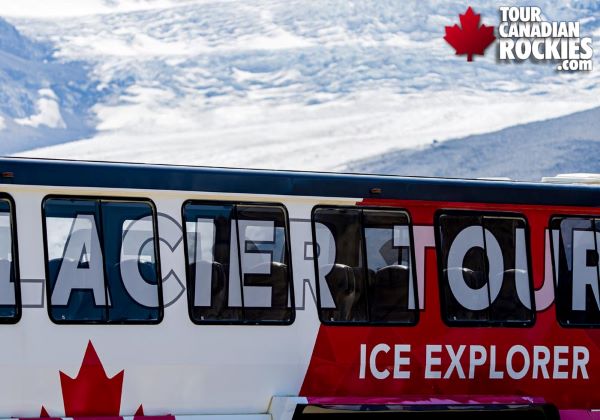
Jasper Columbia Icefields Ice Explorer Bus Details

Jasper Columbia Icefields Ice Explorer Bus Details


Columbia Icefield & Athabasca Glacier Reviews

Columbia Icefield Map

Banff, Jasper, Lake Louise Columbia Icefield.

Contact Jasper Columbia Icefield.com

Click to Contact Us